You’ve tried the mirrors. You’ve switched to white walls. You’ve replaced every light bulb in the house with something brighter.
The room is still dark.
That’s because dark rooms in most St. Louis homes aren’t a decorating problem. They’re a structural problem — a layout that was designed without light in mind, a wall that blocks what sunlight could reach the interior, windows positioned in the wrong place for how the home actually sits on its lot.
Paint and mirrors address the surface. Solving it means addressing the structure.
At Agape Construction, we’ve been designing and building homes and additions in Kirkwood, Chesterfield, Webster Groves, and the surrounding St. Louis area for 40 years. Natural light is one of the most common things homeowners ask about — and one of the most consistently misunderstood. Here’s what actually brings light into a St. Louis home and what it takes to do it correctly.
Why Are So Many St. Louis Homes Chronically Dark Inside?
Most St. Louis homes were built in eras when energy efficiency concerns, smaller window technology, and different lifestyle patterns produced layouts that sacrifice natural light — and updating those layouts requires thoughtful design work, not surface-level fixes.
The homes in Kirkwood, Webster Groves, Glendale, and similar established St. Louis neighborhoods that Agape works in most frequently were built in the 1940s through 1970s. The architectural priorities of those decades were different from today’s. Windows were smaller because glass was less insulating and heating costs were significant. Rooms were more compartmentalized — separate spaces for separate functions rather than the open, light-flowing floor plans that contemporary homeowners prefer.
The result: a beautifully built older home with genuinely limited natural light, not because something went wrong, but because the design reflected different priorities at a different time.
Natural light transforms interiors, making spaces feel larger, brighter, and more inviting — and the homes that achieve this aren’t necessarily the ones with the most windows. They’re the ones where windows are positioned correctly relative to the sun’s path, where interior walls don’t block light from traveling through the space, and where the relationship between indoor and outdoor is considered as part of the design.
Addressing dark rooms in a St. Louis home means asking a design question before it becomes a construction question: what’s actually blocking the light, and what’s the most effective intervention?
What Are the Most Effective Ways to Add Natural Light to an Existing St. Louis Home?
The three most impactful interventions for adding natural light to an existing home are strategic window additions or enlargements, interior wall removal or modification to allow light to travel through the space, and home additions that create new exterior exposures — in roughly that order of cost and impact.
Window additions and enlargements represent the most direct path to more natural light — more or larger windows on exterior walls. This isn’t simply replacing existing windows with larger ones — it involves modifying the wall opening, potentially addressing load-bearing structure above the window, and integrating the new window with the existing exterior cladding so the addition looks intentional rather than patched.
Window placement relative to sun orientation matters enormously. South-facing windows capture the most sunlight throughout the day in the Northern Hemisphere, making them ideal for main living areas. East-facing windows provide warm morning light, perfect for kitchens and breakfast areas. A window added to the wrong wall for the home’s orientation produces less light improvement than the scope of the work would suggest. Our architects assess orientation as part of any window project before a single cut is made.
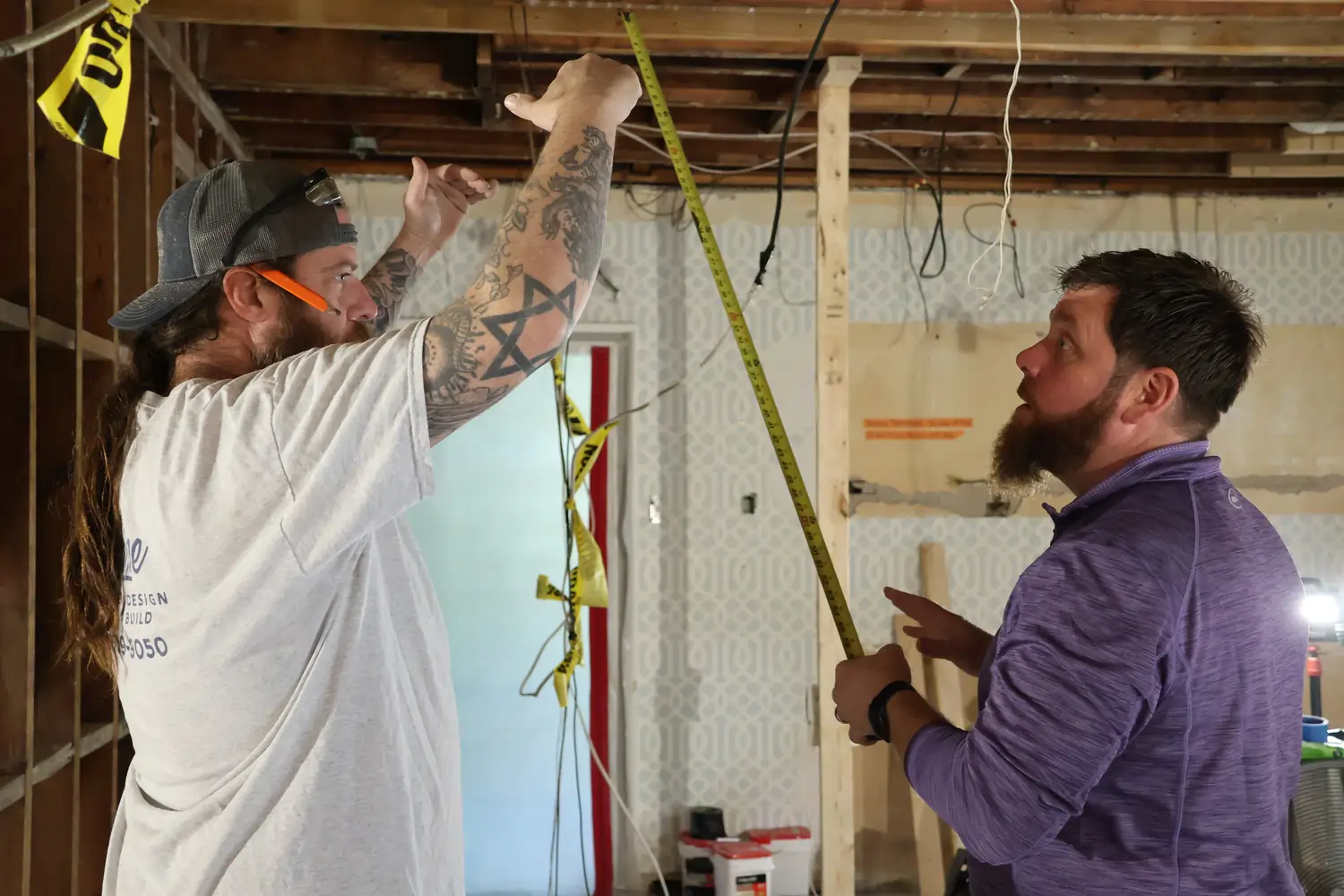
Interior wall modification addresses the layout itself. In many older St. Louis homes, the layout is the problem. A kitchen enclosed behind solid walls receives no borrowed light from adjacent rooms. A hallway that dead-ends into a wall blocks light from traveling through the home.
Opening or partially opening interior walls — replacing solid walls with partial-height half walls, columns, or glass panels — allows light from exterior windows in one room to illuminate adjacent spaces. This is one of the most cost-effective natural light interventions available because it doesn’t require creating new exterior openings. The light already entering the house simply has a clear path through it.
Home additions with new exterior exposures address the most structurally constrained situations. When a room is truly dark because it’s surrounded on multiple sides by other rooms with no exterior exposure, the most thorough solution is a home addition that creates new exterior walls and new window opportunities. A family room addition on the south or east side of a Kirkwood home doesn’t just add square footage — it opens the interior of the existing house to a new light source that didn’t exist before. As we covered in our home addition guide, additions in the Greater St. Louis market solve multiple problems simultaneously — space, light, flow — which is why the return on investment calculation often favors a well-designed addition over multiple smaller interventions that each address only part of the problem.
What Window Types Bring the Most Light Into a St. Louis Home?
Picture windows, casement windows, and floor-to-ceiling window walls deliver the most light per opening — but the right choice depends on the wall location, the room’s ventilation needs, and how the window integrates with the home’s existing architectural character.
Picture windows are fixed, non-opening windows that maximize glass area relative to frame. They deliver the most light per square foot of wall opening of any window type. The trade-off is no ventilation — picture windows don’t open. For a living room or dining area where ventilation is handled elsewhere, this is typically an acceptable trade-off for maximum light.
Casement windows open on a side hinge and provide good ventilation alongside strong natural light. For bedrooms and kitchens where both light and airflow matter, casements are often the strongest choice. Casement and awning windows provide an excellent solution for rooms where ventilation is a priority alongside light.
Floor-to-ceiling window configurations — either a single large window or a combination of windows stacked or arranged to fill the wall height — create a dramatically different light quality than standard window heights. These designs not only flood the area with light but also provide views that strengthen the connection to the outdoors. In a St. Louis home where the backyard view is beautiful, a floor-to-ceiling window wall transforms the room’s relationship to the exterior entirely.
For bathrooms, hallways, and rooms truly buried in the interior of a home with no practical exterior wall access, tubular sun tunnels route natural light through a reflective tube from a roof collector to an interior diffuser — a practical solution for interior spaces where a traditional window isn’t possible.
Agape is an authorized Pella dealer and installer. Our Pella Windows service covers the full range of window options for St. Louis homes. The product selection conversation always follows the design conversation, not the other way around.
How Does Open Floor Plan Design Affect Natural Light in St. Louis Homes?
Open floor plan remodels that remove or reduce interior walls don’t just create physical space — they allow natural light from exterior windows in one area to illuminate the entire connected space, effectively multiplying the impact of existing windows without adding any new exterior openings.
This is one of the most underappreciated natural light strategies in home renovation — and one of the most cost-effective.
A kitchen with one south-facing window that’s enclosed behind solid walls receives that one window’s worth of light. The same kitchen, opened to an adjacent living room with west-facing windows, receives both sources. The light travels freely through the connected space, reducing dark corners and creating the airy, connected feeling that characterizes well-designed contemporary homes.
For older St. Louis homes with compartmentalized layouts — a characteristic of many Kirkwood, Webster Groves, and Glendale homes built in the mid-20th century — this is often the highest-impact renovation available for the cost. The structural assessment required to safely remove or modify load-bearing walls is an important step, but it’s work our architects and builders execute routinely in this market.
Our kitchen remodel projects frequently involve this combination — enlarging a window or adding one on an exterior wall, while simultaneously opening the kitchen to adjacent living space so the improved light reaches both areas.
What Should St. Louis Homeowners Know Before Adding Windows or Modifying Walls for Natural Light?
Every window addition that creates a new or enlarged opening in an exterior wall requires a building permit and a structural assessment — load-bearing walls require properly engineered headers above new openings, and this work must be permitted and inspected in every St. Louis area municipality.
Any time a new opening is cut in an exterior wall — for a window, a door, or any other purpose — the structure above that opening must be supported by a properly sized header beam. The header transfers the load from above the opening to the wall framing on either side. An undersized or missing header creates a structural problem that’s invisible from the finished surface until it isn’t — until you notice the door above the window sticking, or the wall showing stress cracks, or a more serious structural symptom that requires significant remediation.
Building permits ensure this work is inspected. Every Kirkwood, Chesterfield, Ladue, and Des Peres municipality requires permits for structural wall modifications and new window openings. The permit process exists specifically to ensure these structural elements are correct.
Agape manages the permit process as a standard part of every project — filing applications, coordinating inspections, and ensuring all work meets the building code requirements of the specific municipality where the home is located. Our five-decade presence in the St. Louis market means we know the requirements and the process in every community we work in.
What Does a Natural Light Remodel Actually Cost in the Greater St. Louis Area?
The cost of improving natural light in a St. Louis home ranges from $5,000–$15,000 for a single window enlargement with structural work to $30,000–$80,000+ for an open floor plan remodel that combines wall removal, window additions, and interior redesign — with the investment justified by the transformation in how the home feels and functions daily.
The wide range reflects genuinely different scopes of work. A single window enlargement — cutting a larger opening in an existing wall, engineering the header correctly, installing a quality window, and finishing interior and exterior — is a defined project with a defined cost.
An open floor plan remodel that removes a load-bearing wall between a kitchen and living room, redesigns the kitchen layout to take advantage of the new openness, adds or enlarges windows on the south wall, and refinishes the connected space is a significantly larger project — but it’s also transforming multiple aspects of the home simultaneously.
The question to ask isn’t “how much does a window cost?” It’s “what’s the outcome I want, and what combination of work produces it most effectively for my home’s specific layout?” That’s the conversation our complimentary consultation is designed to have. We look at your home, identify what’s actually limiting the light, and present options at different scope and budget levels so you can make an informed decision rather than guessing at what will work.
FAQ: Adding Natural Light to St. Louis Homes
Do I need a permit to add a window in St. Louis County or Kirkwood?
Yes. Any new window opening or enlargement of an existing opening in an exterior wall requires a building permit in St. Louis County municipalities including Kirkwood, Chesterfield, Webster Groves, Ladue, and Des Peres. The permit process ensures the structural work — specifically the header above the opening — is correctly engineered and inspected. Agape handles permit applications and inspections as a standard part of every window and remodeling project.
Can I add natural light to an interior bathroom with no exterior wall?
Yes — through a sun tunnel or tubular skylight that routes natural light from a roof collector through a reflective tube to an interior diffuser. These are practical solutions for interior bathrooms, hallways, and rooms genuinely surrounded by other spaces with no exterior wall access. An alternative for bathrooms adjacent to exterior walls is a window addition in that wall, which Agape designs and installs as part of bathroom remodel projects.
Will removing a wall to open up the floor plan actually improve natural light?
Significantly, in many cases. When a room with exterior windows is enclosed by solid walls, the light from those windows stays in that room. Opening the wall allows light to travel through the connected space. For St. Louis homes with compartmentalized original layouts — particularly kitchens enclosed from adjacent living spaces — this is often the highest-impact intervention available for improving light throughout the entire living area.
How do I know if a wall is load-bearing before removing it?
Load-bearing walls run perpendicular to floor joists and carry the weight of the structure above them. Identifying them accurately requires understanding the home’s structural system — something that varies by home age, construction type, and design. Agape’s architects assess load-bearing conditions as a standard part of any wall modification project. Never remove a wall without this assessment — the consequences of removing a load-bearing wall without proper structural support are serious and expensive to correct.
Does Agape work with Pella windows for natural light projects?
Yes. Agape is an authorized Pella dealer and installer. Our Pella Windows service covers window selection and professional installation for natural light projects ranging from single window additions to full window wall designs. Pella’s range of window types, sizes, and configurations accommodates the variety of natural light strategies that different St. Louis home layouts require.
How long does a window addition project typically take in Greater St. Louis?
A single window enlargement — permit, structural work, window installation, interior and exterior finishing — typically takes two to four weeks from permit approval to completion. Larger projects combining multiple windows with interior wall modifications run longer depending on scope. Permit timelines vary by municipality; some process applications faster than others. Agape builds realistic project timelines into every estimate so you know what to expect before work begins.
Light Changes Everything
The difference between a room that feels cramped and dark and a room that feels open and alive isn’t always square footage. Sometimes it’s a single well-placed window. Sometimes it’s one wall opened to bring two rooms — and two light sources — together.
The homes in Kirkwood, Webster Groves, Chesterfield, and Glendale that feel expansive and luminous aren’t necessarily the largest homes on their streets. They’re the ones where a designer thought carefully about where light comes from and how to let it move.
That’s exactly the conversation our complimentary consultation is designed to start.
📞 314-909-9050
🌎 Schedule a consultation
🌎 Pella Windows
🌎 Home additions
📍 Kirkwood, MO | Chesterfield, MO — serving Greater St. Louis
Agape Construction — Trustworthy, quality design-build services for the place you call home.